
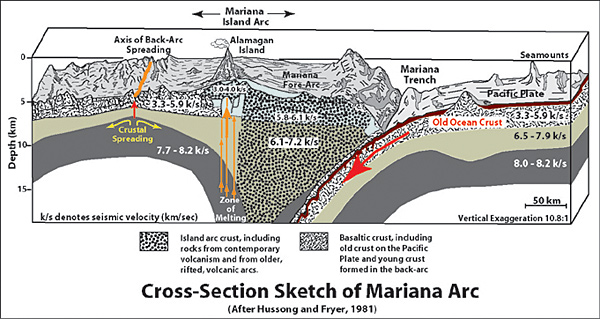
This list ranks the top five deepest named oceanic trenches in the world by their maximum published depth — the deepest mapped point within each trench measured in metres below mean sea level. The ranking uses the most authoritative, modern bathymetric surveys and scientifically documented depth reports available for each trench, retaining reported uncertainties where provided. Because measurement methods and survey coverage vary, the list reflects the deepest confirmed depths reported in the verified research rather than a single global re-survey.
Why it matters: these trenches are not only feats of undersea topography but also centers of extreme geology, biology and plate tectonics. The depths recorded here are the product of dedicated mapping expeditions and peer-reviewed reporting, and they help scientists compare the planet’s deepest marine depressions on a consistent, reproducible basis.
Quick Comparison
| Rank | Item | Location | Ranking Value (m) | Date/Year |
|---|---|---|---|---|
| #1 | Mariana Trench | Western Pacific, east of the Mariana Islands | 10,925 ± 12 | 2019 |
| #2 | Tonga Trench | Southwestern Pacific, east of Tonga and north of New Zealand | 10,816 ± 16 | 2021 |
| #3 | Philippine Trench | Western Pacific, east of the Philippines | 10,540 | 2018 |
| #4 | Kermadec Trench | Southwestern Pacific, northeast of New Zealand | 10,047 | 2013 |
| #5 | Izu–Ogasawara (Izu–Bonin) Trench | Western Pacific, east of Japan and south of the Japanese archipelago | 9,775 | 2025 |
#5 — Izu–Ogasawara (Izu–Bonin) Trench

Location: Western Pacific, east of Japan and south of the Japanese archipelago
Ranking value: 9,775 m
Relevant year: 2025
The Izu–Ogasawara (also known as the Izu–Bonin) Trench ranks fifth on this list based on a 2025 published survey that reports a deepest confirmed point of 9,775 metres. This trench is part of the longer Izu–Bonin–Mariana subduction-arc system where the Pacific Plate descends beneath the Philippine Sea Plate, creating a narrow, deep trough. Its ranking is determined by the deepest mapped depression that has been published in a modern scientific report; although other nearby features may approach similar depths, the 9,775 m figure is the strongest comparable published maximum for this named trench in the verified literature.
#4 — Kermadec Trench

Location: Southwestern Pacific, northeast of New Zealand
Ranking value: 10,047 m
Relevant year: 2013
The Kermadec Trench, recording a published maximum depth of 10,047 metres from a 2013 survey, ranks fourth. It forms part of the Tonga–Kermadec arc system and marks the subduction of the Pacific Plate beneath the Australian Plate. The 2013 JAMSTEC report documenting the trench’s deepest mapped point is the basis for its placement here. The trench’s tectonic setting and length make it both geologically active and an important area for high-resolution bathymetric work that defines its maximum confirmed depth.
#3 — Philippine Trench

Location: Western Pacific, east of the Philippines
Ranking value: 10,540 m
Relevant year: 2018
The Philippine Trench is placed third with a reported maximum depth of 10,540 metres from a published depth synthesis. Stretching roughly 1,300 km along the Philippine Sea Plate boundary, it is one of the planet’s most seismically active subduction zones. Its 10,540 m value comes from the best-available synthesis cited in the verified literature, and the trench’s high seismicity and tectonic complexity underscore why detailed bathymetric surveys and depth syntheses are essential for establishing its deepest confirmed point.
#2 — Tonga Trench

Location: Southwestern Pacific, east of Tonga and north of New Zealand
Ranking value: 10,816 ± 16 m
Relevant year: 2021
The Tonga Trench occupies the second position with a high-resolution multibeam survey reporting a deepest mapped point of 10,816 metres, with an uncertainty of ±16 m from a 2021 report. The Tonga subduction system is notable for exceptionally rapid Pacific Plate motion and frequent large earthquakes, factors that shape the trench’s deep morphology. The value and its stated uncertainty come from a modern multibeam survey, which is why this trench ranks above the Philippine and Kermadec trenches in our ordered list.
#1 — Mariana Trench

Location: Western Pacific, east of the Mariana Islands
Ranking value: 10,925 ± 12 m
Relevant year: 2019
The Mariana Trench is ranked first, with its deepest depression — Challenger Deep — recorded at 10,925 metres below mean sea level, with an uncertainty of ±12 m, based on the Five Deeps Expedition survey published in 2019. This trench is the deepest known place in the global ocean according to the cited survey. Its primary placement at the top of the list reflects the highest confirmed published maximum depth among named oceanic trenches in the verified reports.
How We Ranked Them
Ranking metric: maximum published depth of the trench’s deepest mapped point, measured in metres below mean sea level. We used modern multibeam sonar surveys or scientifically documented bathymetric reports where available and retained reported uncertainties when provided.
Inclusion and exclusion rules: the list covers named oceanic trenches only — isolated or unnamed seafloor depressions were excluded. Values were taken from the strongest comparable published maximum-depth reports located in the verified research rather than from a single uniform global survey; reporting years therefore differ and are shown alongside each trench.
Uncertainties and disagreements: reported trench depths can vary with survey coverage, processing methods and vertical datums. Where a source provided uncertainty (± values), that uncertainty is retained. Borderline candidates were excluded when modern surveys placed their deepest confirmed points below the fifth-ranked trench — for example, a modern multibeam survey of the Kuril–Kamchatka Trench reported a deepest surveyed depression of approximately 9,604 m, which is shallower than the Izu–Ogasawara Trench’s 9,775 m; older higher figures for the Kuril–Kamchatka trench are not supported by that modern survey and were therefore not used.
Frequently Asked Questions
How is “depth” defined for these trenches?
Depth here refers to the maximum published depth of a trench’s deepest mapped point, measured in metres below mean sea level. We used values reported in modern bathymetric surveys or scientifically documented depth syntheses and included any stated uncertainties.
Why do different reports give different depths for the same trench?
Depth differences arise from survey coverage, sonar resolution, data processing methods and choice of vertical datum. Older single-beam soundings, limited coverage, or local depressions can produce differing figures; this list follows the most authoritative modern surveys or documented syntheses cited in the verified research.
Why are unnamed depressions or isolated deep spots excluded?
The ranking covers named oceanic trenches only to ensure comparability and to focus on large-scale subduction troughs. Unnamed or isolated seafloor depressions may be deeper locally but are not considered trenches under the inclusion rules used for this list.
How were borderline cases handled, for example where older reports show greater depth?
Where modern multibeam surveys contradicted older, higher figures, the modern published survey was preferred. The verification explicitly excluded candidates whose best modern survey showed a maximum shallower than the fifth-ranked trench (for example, the Kuril–Kamchatka Trench’s modern survey depth is shallower than Izu–Ogasawara), so older unsupported numbers were not used.
Sources
- Earth-Science Reviews — “The five deeps: The location and depth of the deepest place in each of the world’s oceans” — primary source for the Mariana Trench Five Deeps Expedition depth.
- Geoscience Data Journal — “High-resolution multibeam sonar bathymetry of the deepest place in each ocean” — primary source for the Tonga Trench 2021 multibeam survey depth.
- Progress in Oceanography — “Habitat heterogeneity of hadal trenches” — used as a synthesis reference for several trenches including Philippine and Kermadec context.
- Journal of Biogeography (DOI) — 2025 report cited for the Izu–Ogasawara (Izu–Bonin) Trench depth.
- JAMSTEC press release (2013) — source documenting the Kermadec Trench deepest point reported in 2013.
- GEBCO gridded bathymetry data — secondary bathymetric reference cited for the Philippine Trench depth synthesis.
- Encyclopaedia Britannica — “Mariana Trench” — secondary general reference for the Mariana Trench and Challenger Deep.
Last Updated
September 2026
Discover more from Magazine of AI
Subscribe to get the latest posts sent to your email.