
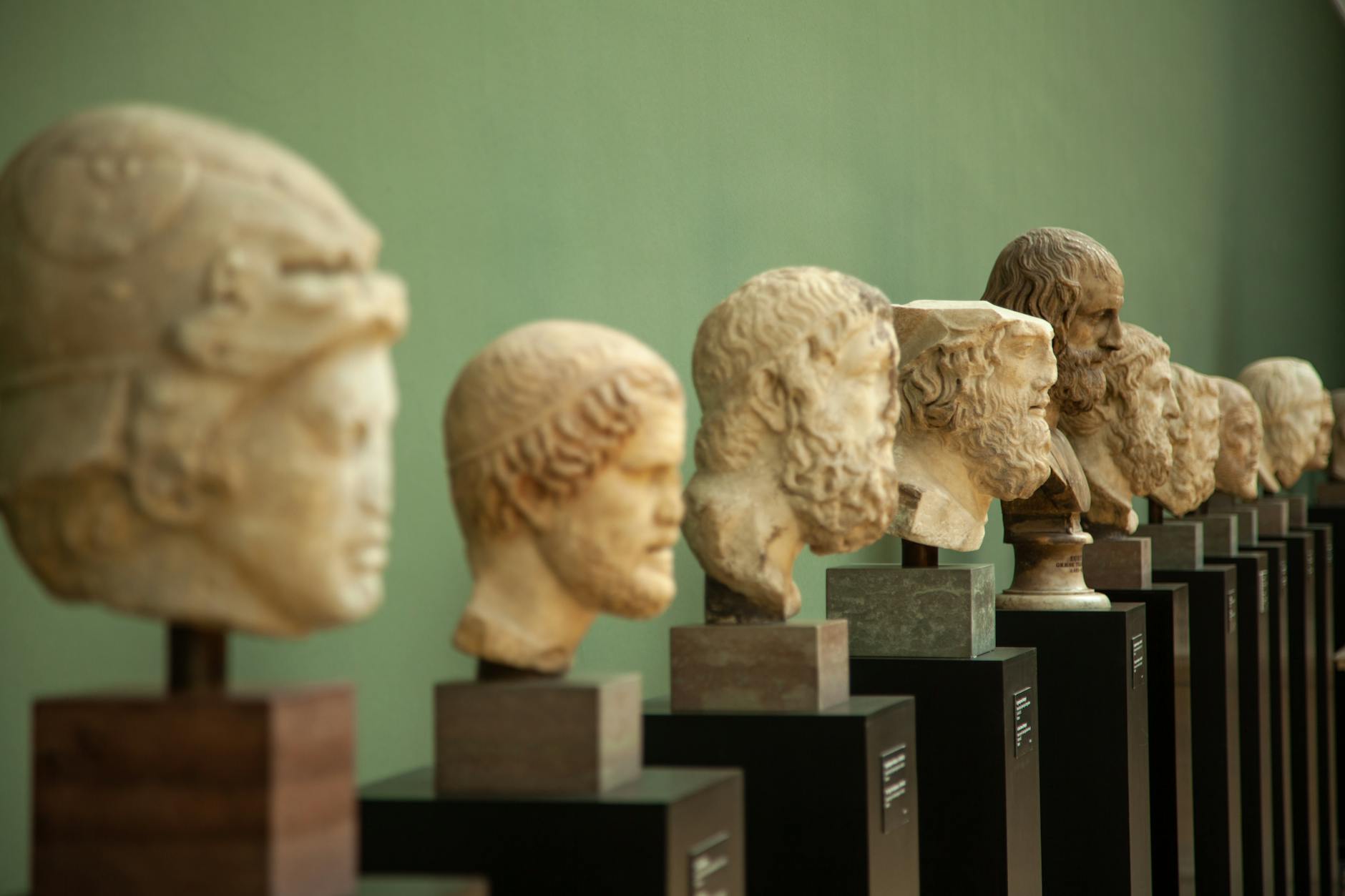
1) Aristotle
Aristotle built a systematic philosophy spanning logic, metaphysics, ethics, politics, biology, and rhetoric. His syllogistic logic formalized patterns of valid inference for centuries. In ethics, he proposed virtue as a habit aimed at flourishing (eudaimonia) through practical wisdom. Politics examined constitutions and the role of the middle class in stability. Empirical observation shaped his biology texts, even when conclusions were later revised. His influence echoes in medieval scholasticism and modern analytic categories. Commentators across cultures reframed his work for new contexts.
2) Plato
Plato used dialogues to probe justice, knowledge, love, and the ideal state. The Theory of Forms posited abstract realities as standards for particulars. In the Republic, he explored philosopher‑kings and education’s role in civic virtue. The Allegory of the Cave dramatized enlightenment and resistance to truth. His Academy became a model for organized intellectual life. Plato’s metaphysics, ethics, and political thought shaped millennia of debate from Augustine to contemporary virtue theory.
3) Confucius
Confucius emphasized ethical cultivation, social roles, and ritual propriety (li). The Analects collects sayings on benevolence (ren), filial piety, and governance by moral example. Education and self‑discipline were pathways to harmony in family and state. Meritocratic ideals inspired civil service traditions in East Asia. Neo‑Confucians later integrated metaphysics while preserving ethical focus. Confucian values continue to inform leadership, education, and community life.
4) Immanuel Kant
Kant’s critical philosophy examined the limits and capacities of reason. The Critique of Pure Reason argued that space and time are forms of intuition shaping experience. In ethics, the categorical imperative demanded actions one can will as universal law. Autonomy and dignity grounded modern human rights discourse. His aesthetics linked judgment, purposiveness, and the experience of beauty. Kant’s influence spans metaphysics, epistemology, and moral and political philosophy.
5) Friedrich Nietzsche
Nietzsche critiqued traditional morality and metaphysics as expressions of power and resentment. He called for revaluation of values and the creation of life‑affirming ideals. “God is dead” captured the cultural loss of shared metaphysical certainties. Concepts like the will to power, eternal recurrence, and the Übermensch challenged readers to craft meaning. His aphoristic style fused philosophy with literature. Nietzsche’s legacy reaches existentialism, psychoanalysis, and post‑structuralism.
🧠 Summary
From Plato’s forms to Aristotle’s system, Confucian ethics, Kantian autonomy, and Nietzschean critique, these thinkers reframed questions of truth and the good life. Their ideas seeded institutions—academies, civil services, rights regimes—and literary forms. Each philosopher both inherited and disrupted traditions. Engagement today means interpretation, application, and debate across cultures. Philosophy thrives where arguments meet lived experience.
🎁 Extras
- On This Day: 335 BCE — Aristotle founded the Lyceum in Athens.
- Fun Fact: Plato’s Academy operated for centuries until late antiquity.
- Book/Doc: Sophie’s World by Jostein Gaarder (intro to philosophy).
- Reader Question: Which philosopher best matches your view of a good life?
- Visual Tip: Philosophy timelines
🗣 Quote of the Day
“Happiness is the meaning and the purpose of life, the whole aim and end of human existence.”
— Aristotle
Discover more from Magazine of AI
Subscribe to get the latest posts sent to your email.