
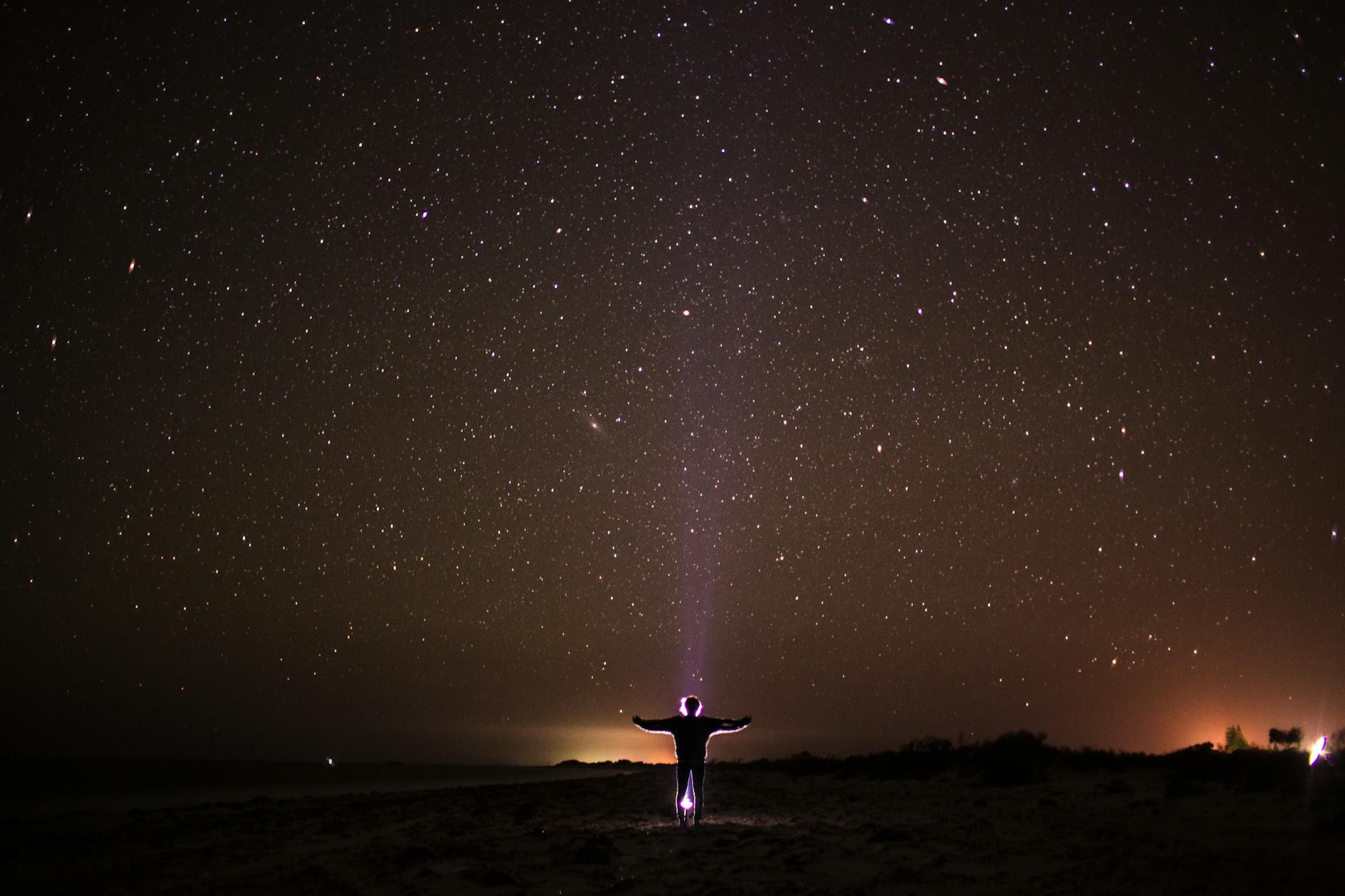
1) Exoplanet Catalogs
Space telescopes revealed thousands of planets orbiting distant stars. Transit and radial‑velocity methods dominate finds. Super‑Earths and mini‑Neptunes seem common. Atmospheric studies search for water vapor and molecules. Discovery reframed formation theories and habitability. New missions expand detection to cooler worlds.
2) Gravitational Waves
Detectors captured ripples in spacetime from black‑hole and neutron‑star mergers. Signals confirmed predictions of general relativity. Multi‑messenger astronomy combines light and waves. Measurements probe cosmic expansion and nuclear matter. Future facilities will broaden frequency windows. A new observational era began.
More about gravitational waves
3) First Image of a Black Hole
The Event Horizon Telescope formed an Earth‑sized array to image M87*. Data processing reconstructed a ring around a dark shadow. Tests of gravity in strong fields gained evidence. Follow‑ups targeted the Milky Way’s center. Algorithms and collaboration proved essential. Public imagination seized the moment.
4) Water Stories on Mars
Rovers and orbiters mapped ancient lakebeds, deltas, and minerals. Ice caps and subsurface ice shape future exploration. Organic molecules appear in sediments with complex chemistry. Seasonal features spurred debate over brines. Sample caching prepares for return missions. Mars remains a prime astrobiology target.
5) Fast Radio Bursts
FRBs are millisecond radio flashes from distant galaxies. Some repeat; others are one‑offs. Localizations revealed host environments. Theories include magnetars and other exotic engines. FRBs probe intergalactic matter and magnetic fields. New arrays will multiply detections.
🧠 Summary
Space discoveries transformed catalogs and physics: exoplanets, waves, and black‑hole images. Mars offers a watery past, while FRBs test cosmic matter. Collaboration, instruments, and algorithms power progress. Each answer births new questions.
🎁 Extras
- On This Day: 2019 — The first black hole image (M87*) was unveiled.
- Fun Fact: Some exoplanets orbit two stars like Tatooine.
- Book/Doc: Welcome to the Universe by Tyson, Strauss & Steinhardt.
- Reader Question: Which mission excites you most in the next decade?
- Visual Tip: Astronomy timelines
🗣 Quote of the Day
“Somewhere, something incredible is waiting to be known.”
— Carl Sagan
Discover more from Magazine of AI
Subscribe to get the latest posts sent to your email.